
October 15, 2026
Why Study Slam is the Best Revision App for Students with Dyslexia
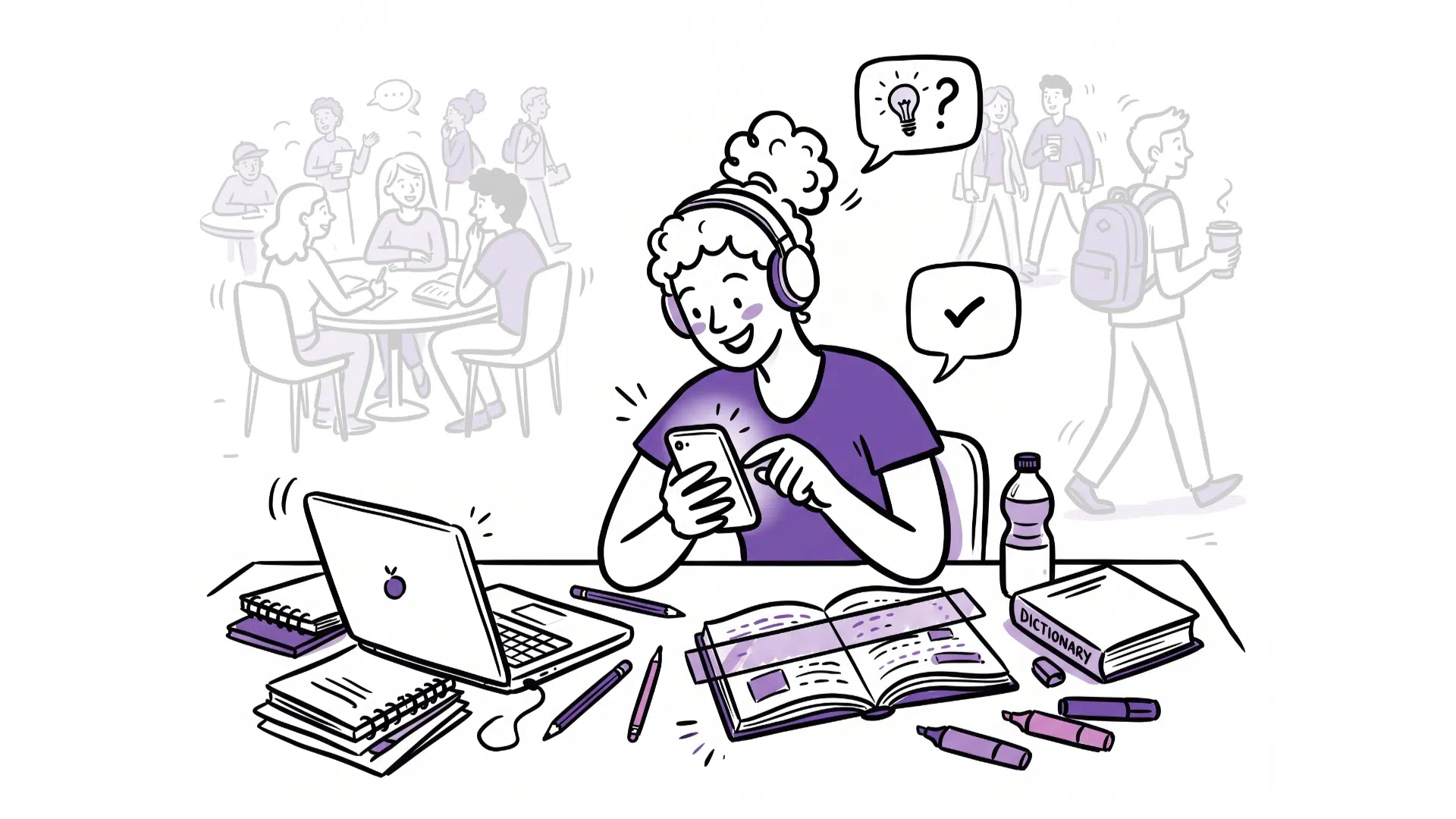
Many students with dyslexia can explain a topic clearly when it is talked through, then find the same material much harder to revise from a page. Most revision tools are built around reading and writing, so a good share of the effort can go on getting through the text before any learning has started.
Study Slam was designed so that reading is one route into the material among several. Students can listen to an audio lesson, test themselves with a quiz or read key notes drawn from their own material – whatever mix suits them that day. It comes from OpenGenius, the team behind Ayoa, used by millions of people worldwide, with decades of experience in mind mapping and assistive technology. That background shaped how we approached revision for students who find reading-heavy study hard going: offer several ways into the material, and several ways to check what has stuck.
Here is how that works in practice, and why we think it makes Study Slam one of the best options for students with dyslexia.
Why most revision apps fall short for dyslexia
Walk through a typical revision app from start to finish and see how much of it relies on text. You build the material by writing flashcards or summarising notes. You study it by reading it back. You check what you know by typing answers in full. Each stage asks for reading, spelling or scanning, the areas dyslexia can make slower and more tiring.
Moving those tasks onto a screen doesn’t change what they ask of a student. Audio, where it exists at all, tends to sit alongside as an optional extra. For someone who understands a topic well, that can mean most of a session goes on getting through the format, and the energy left for remembering is whatever the decoding didn’t use.
When we looked at what already existed, this was the pattern we kept seeing: tools designed around the page first, with other ways added later, if at all. That became the starting point for Study Slam. We wanted students to be able to choose how they take material in from their very first session.
We flipped the premise most revision apps are built on: we want to meet students where they are, not force them to adapt to us.
What we built differently, and why
Study Slam reduces the amount of reading and writing students need to do when preparing revision material, and gives them several ways to work through it.
It starts with the material itself. Students add notes, a PDF or a video, or begin from a topic, and Study Slam turns it into key notes, quizzes and audio lessons. That removes the stage where a lot of reading and writing usually happens, rewriting notes and making flashcards by hand, so a student can go straight from their own material to revising it.
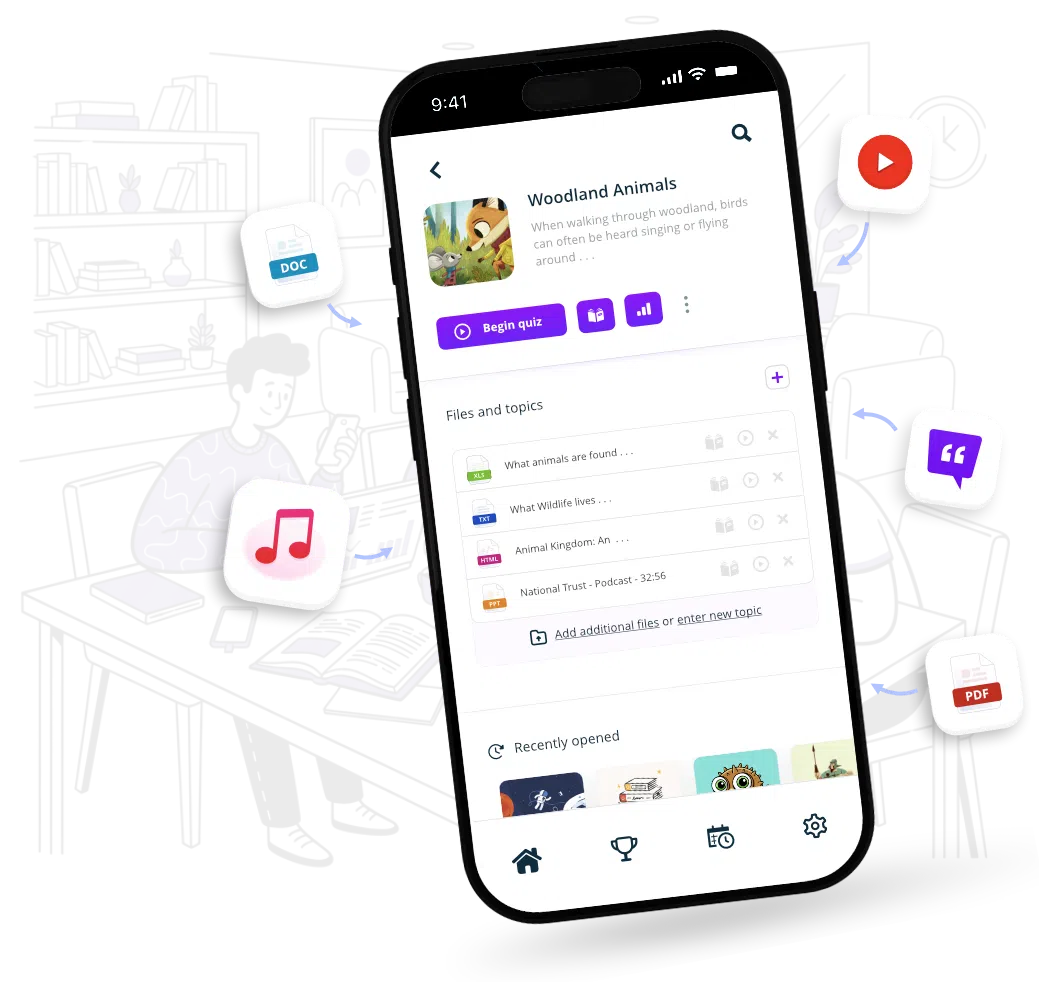
Studying comes next, with the same material in more than one form. A student can listen to an audio lesson when text isn’t working that day, read the key notes when it is, or use read-aloud and text highlighting to see and hear the same words together, which is designed to support comprehension and recall. When they do read, the accessibility suite lets them set up the page to reduce visual barriers. Switching between formats doesn’t mean starting again or rebuilding anything – no progress is lost when moving from one to another.
Checking what has stuck comes last. Quizzes ask students to recall what they have studied, so they find out where the gaps are without rereading a page to look for them. Every quiz, audio lesson and set of key notes also links back to the source it came from, which makes it quicker to check an answer against the original.
In many tools, reading is the default and other formats arrive as extras. Here, a student has options from the first session, and the aim throughout is for less of each session to go on decoding and more of it on remembering.
Checking what you know without the spelling pressure
Writing is the other half of revision that dyslexia can make harder. Spelling an answer out, finding the right words under pressure or organising ideas into sentences can take more effort than knowing the answer does. A student might be able to explain a topic clearly out loud, then find the same answer slow and frustrating to type out in full, even if they know they might need to in an exam.
Study Slam’s quizzes are designed with that in mind. Take a question about the causes of a historical event. A student might choose the right option from a set, determine whether a statement is true or false, or sort pertinent information between categories. That means a quiz can check what they know without spelling getting in the way.
Revision that feels like a spelling test can put students off, and a format that fits is easier to keep returning to. Short, low-effort answers also mean a quiz can fit into a few spare minutes, which helps students practise little and often.
Written practice still has a place, particularly when an exam asks for it. A student can come to it having already checked what they know, so the gaps are found and the key points are fresh before they start writing.
What the research says about listening and recall
Two areas of research inform how Study Slam supports students with dyslexia. The first is listening. A meta-analysis published in 2017 found that text-to-speech and read-aloud tools may help students with reading difficulties understand what they read. The reasoning behind these tools is that listening can give students access to material that is harder for them to read than to understand.
The second area is recall. A 2013 review compared ten common learning techniques and rated distributed practice, which means revisiting material over time, and practice testing, which means retrieving information from memory, as having the highest utility across a range of learners, materials and learning conditions. A 2021 meta-analysis of 242 studies involving more than 169,000 participants also found that these two techniques had the largest average effects among the ten it examined. In practice, that means coming back to a topic after a gap and bringing it to mind from memory, which tends to help material stick better than rereading the same page. For students who find reading effortful, recall-based revision can also reduce how much of a session goes on rereading.
Study Slam applies both through audio lessons and read-aloud, quizzes, and a scheduling engine that spaces material out for review. Because these are generated from a student’s own notes, PDFs or videos, the same material can be listened to, tested by recall and revisited later on a schedule, without needing to be rebuilt each time. Students vary in what helps them, so these formats are offered as choices at each stage. The research backs the techniques themselves. Combining them in one app is our own design decision for supporting students with dyslexia.
Designed around real revision moments
By the end of a day of lectures, slides and set texts, a student with dyslexia may have done a lot of reading already. Sitting down in the evening to work through revision notes can feel like another long shift, and the energy that goes into decoding is energy that then isn’t available for remembering.
Study Slam is built mobile-first, so revision doesn’t have to wait for that desk session. Reading on a small screen while travelling can be hard going, so audio does much of the work. An audio lesson works on a bus, on a walk or while making dinner, with no page to keep track of. A short quiz fits into the gap between lectures. Both draw on the student’s own material, and the revision queue and reminders mean the next step is already waiting when a spare moment appears.

Short sessions spread across the day can also be gentler on reading effort than one long block, and revisiting a topic over several days is the pattern the research on distributed practice supports. A student can listen on the way home, test themselves while the kettle boils and save the reading for when it suits them.
Built with DSA students in mind
For many students with dyslexia, the Disabled Students’ Allowance (DSA) can bring a mix of assistive software, study skills tuition and strategies for working with text. These can help with reading, writing and organising coursework. Revision asks for something slightly different: getting a large amount of material to stay in memory before an exam, often while studying alone.
Study Slam is a DSA-approved revision tool designed for that stage. Audio lessons, read-aloud and quizzes drawn from a student’s own material can sit alongside other assistive technology and the strategies agreed with a tutor, giving those strategies somewhere to be practised between sessions. For a student who finds dense text slow going, that might mean starting with an audio lesson and turning to the key notes afterwards.
The team behind Study Slam also built Ayoa, which has DSA approval and is recommended by needs assessors and assistive technology professionals across the UK. That background informs how Study Slam is designed, with support built into the revision tasks themselves.
Try Study Slam
Revision can offer more than one way into the material. Study Slam brings audio lessons, read-aloud, quizzes and scheduling together around a student’s own notes, drawing on the OpenGenius team’s experience in mind mapping and assistive technology.
FAQs
How can I revise effectively if I have dyslexia?
Many students find a mix of methods works better than rereading alone: listening to audio summaries, turning notes into questions, and testing what you remember in short sessions spread across several days. Clear, uncluttered notes and visual layouts can also make material easier to return to. The best mix varies from student to student.
What should a revision app offer students with dyslexia?
Useful features include audio lessons or read-aloud, so reading isn’t the only way in, quizzes that test recall, adjustable reading settings and a way to check answers against the original source. Short sessions and scheduling can also keep revision manageable. Study Slam is designed around these features.
Can listening to audio help with revision if reading is difficult?
It may. Research on text-to-speech and read-aloud tools suggests they can help students with reading difficulties understand what they read, and audio lets revision happen on a walk or a commute, away from the page. Audio works best alongside other methods, such as testing yourself afterwards, so the material is recalled as well as heard.
How does Study Slam support revision for students with dyslexia?
Study Slam turns a student’s notes, PDFs, videos or a topic into key notes, quizzes and audio lessons, so reading is one way in among several. Read-aloud, text highlighting and an accessibility suite help students set up a reading environment that suits them, and every quiz links back to its source for checking.
Are there DSA-approved revision apps for students with dyslexia?
Yes. Study Slam is a DSA-approved revision tool and can sit alongside other assistive technology recommended in a needs assessment. It is built by the team behind Ayoa, a mind-mapping platform that also holds DSA approval and is recommended by needs assessors and assistive technology professionals across the UK.
When can I start using Study Slam?
Study Slam is launching soon. Register your interest to be notified and among the first to try it.