
October 14, 2026
Why Study Slam Is the Best Revision App for Students With ADHD

Revision can ask a lot of you before you’ve learnt anything: sitting down, choosing a topic and staying with it long enough to make progress. If you have ADHD, a study routine that depends on steady attention and motivation may be difficult to stick to.
Study Slam started from the opposite assumption: revision needs to fit around attention that comes and goes. We built it to make starting, practising and returning to a topic more manageable. Behind it is OpenGenius, the team with decades of experience in mind mapping and assistive technology, including Ayoa, used by millions of people worldwide. That experience shaped our approach: give students practical ways to organise their learning, explore information and make progress when a conventional study routine isn’t working for them.
This is what that looks like in practice, and why it makes Study Slam one of the best options for ADHD revision in particular.
Why most revision apps fall short for ADHD
Starting without being told to. Sticking with something once the initial interest fades. Remembering yesterday’s topic exists. Judging how long something will actually take. These are the specific mental processes ADHD affects most – and they’re also the infrastructure of revision, beginning long before you even get to the subject itself.
Most revision apps don’t account for any of this. They’re built around the same assumptions paper revision always was: long sessions, linear progress through a syllabus, one format (usually reading), and the expectation that motivation will show up on schedule. A nicer interface or a progress bar doesn’t change any of that underneath. It’s still asking for sustained, linear attention, just with a nicer colour grade.
That’s the gap we kept running into when we looked at what already existed: content built in long, static blocks, little to no active testing, and almost nothing adapting to how differently attention actually behaves day to day. Functional for some students, but flat. Flat is exactly what makes a wandering mind go looking for something else to do.
Building Study Slam started with a question. The easy version was ‘how do we digitise revision’ – but the one that mattered was how do we make revision meet students where they are, both in format and attention.
What we built differently, and why
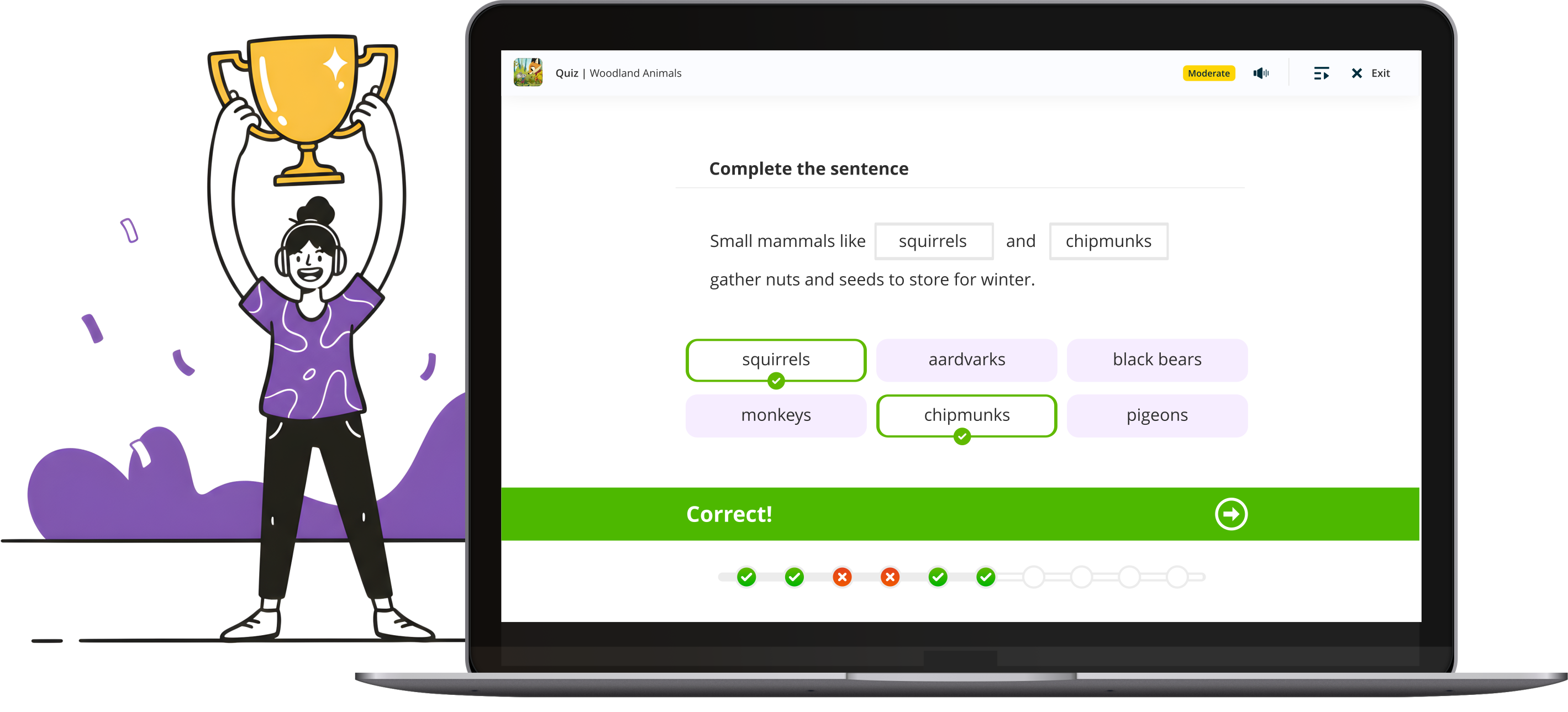
Every feature in Study Slam traces back to one of the problems above. Starting is the hardest part, so sessions are built in minutes rather than hours – answer three questions, listen to one short audio lesson, review yesterday’s mistakes, each one small enough to begin without working up to it. When attention drifts mid-task, there’s a different way back in rather than a lecture to sit through: the same material as a quiz, an audio lesson, or a short set of key notes, so there’s always another entry point when one stops working.
Working memory and time estimation aren’t things Study Slam expects a student to already have sorted. The app holds the plan instead – a queue that tells you what’s next, reminders that bring a topic back before it’s forgotten, scheduling that spaces material out automatically rather than leaving the spacing to chance.
Maybe a quiz question or audio summary doesn’t quite align with what was taught – but nothing in Study Slam is a black box. Every quiz, audio lesson, and set of key notes links back to the original material it came from – the uploaded notes, the PDF, the video – so checking the source takes seconds rather than a search through old folders. For a student already juggling enough logistics, that’s one less thing to keep track of.
Support that feels right for you
With ADHD, knowing what needs doing doesn’t always make it easy to begin. External prompts can help bring revision back into view when attention has shifted elsewhere. Study Slam’s Easy Going, Motivator and Drill Sergeant coaching styles let you choose the tone of that encouragement.
Progress tracking also reduces how much you need to keep in your head between sessions. You can see what you have covered, where gaps remain and what needs another look. When working memory or organisation is a challenge, having that information visible gives you a clearer place to restart.
Built-in study breaks give sessions a rhythm, with opportunities to pause and return. For students whose focus and energy vary, that creates room for a manageable pace. Together, these features provide external structure around revision, with support for getting started, keeping track and taking a break. That structure is a central part of how we have designed Study Slam for students with ADHD.
Built on research into learning
Two well-established techniques inform Study Slam’s approach: distributed practice, which means revisiting material over time, and practice testing, which means trying to recall information instead of simply reading it again. A 2013 review compared ten common learning techniques and rated these two as having the highest utility across a range of learners, materials and learning conditions.
A later meta-analysis, published in 2021, examined 242 studies involving more than 169,000 participants. It also found that distributed practice and practice testing had the largest average effects among the ten techniques examined. The takeaway is practical: returning to a topic and checking what you can remember are valuable parts of a revision routine.
There is also encouraging research into microlearning. A systematic review of 40 studies reported benefits across outcomes including knowledge, retention and engagement. The studies covered different settings and activities, so the findings support thoughtfully designed short learning sessions without establishing that shorter is always better.
Study Slam puts these ideas into practice through its scheduling and quizzes. Its scheduling engine spaces material out for review, helping students revisit what they have studied over time. Quizzes create opportunities to retrieve information from memory and identify what needs another look. A five-minute session becomes more useful when it forms part of that continuing process.
For students with ADHD, the practical appeal is how these techniques fit into a manageable routine. A short quiz gives a session a clear task and an end point, while scheduling reduces the planning needed to return to a topic. The research supports the learning techniques; applying them through this structure is our design rationale for supporting students with ADHD.
Longer sessions can still have a place, particularly when a topic needs sustained explanation or practice. The aim is to make useful revision easier to begin and return to, with a choice of formats and a plan that supports the next step.
Designed around real revision moments
A lot of revision tools assume there’s a dedicated hour waiting somewhere in the day: at a quiet desk somewhere, with phone turned off. For plenty of students, that hour can feel elusive. Either the setup is right but the attention span isn’t, or a burst of motivation arrives at an impractical time. Ten minutes on a bus, a short wait between lessons, a scrolling session on the couch: Study Slam is built mobile-first for that reason, not as an afterthought to a desktop product. A quiz, an audio lesson, or a quick review of yesterday’s mistakes fits into those gaps without needing a laptop, a desk, or any setup beyond opening the app. Dead time stops being dead time and becomes one more place revision can happen whenever motivation strikes.

For a student with ADHD, a planned study block can be difficult to begin even when they want to revise. Finding the notes, choosing a topic and deciding where to start can all add to the effort involved. A short session on a phone puts a defined task within reach, whether that means answering a few questions between lectures or listening to an audio lesson on the way home. It gives students more opportunities to begin when they feel able to engage.
Revision that can happen anywhere is revision that gets done.
Built with DSA students in mind
Getting the right study support can take time. If you have ADHD, you may already know that some parts of revision are harder than others, even if explaining exactly what would help is less straightforward. Perhaps you understand a topic in a lecture but struggle to organise your notes afterwards, or make a revision plan that becomes difficult to follow once the week gets busy.
A needs assessment is an opportunity to discuss those barriers and identify appropriate support. The next challenge is making that support useful in everyday study: opening your notes, deciding what to practise and returning to material before an exam.
Study Slam is a DSA-approved revision tool designed to support those everyday tasks. Its short sessions, scheduling and coaching can complement other assistive technology, study skills support and the strategies a student develops with their tutor. Students have somewhere to put those strategies into practice between appointments and teaching sessions.
The team behind Study Slam also built Ayoa, which has DSA approval and is recommended by needs assessors and assistive technology professionals across the UK. That experience informs how we approach revision: start with the barriers a student encounters, then build support into the activities they need to complete.
For a student whose support needs include task initiation or planning, that might mean a clear revision queue and a prompt to get started. For someone finding sustained reading difficult, it might mean switching to an audio lesson. The emphasis is on having practical options that fit the task and the student.
Try Study Slam
ADHD doesn’t disappear because the format changed, and the exam at the end is exactly the same either way. What changes is how much friction gets added before you even reach the material – long, linear sessions, no structure to lean on, one way into a topic that stops working the moment attention drops. Removing that friction is the actual point of everything above.
Study Slam brings short sessions, flexible formats and structured revision together, backed by the OpenGenius team’s experience in mind mapping and assistive technology.
FAQs
Why do students with ADHD often struggle with revision?
Revision leans heavily on planning, task initiation, sustained attention, and working memory – the exact mental processes ADHD affects most. Long, unstructured sessions make starting difficult, and formats like re-reading rarely hold attention once the initial interest fades. Usually the structure around a session is a bigger problem than the content itself.
How does Study Slam support revision for students with ADHD?
Study Slam combines short quizzes, audio lessons and key notes with a revision queue, scheduling and coaching prompts. These features are designed to reduce the work involved in planning and starting revision, while giving students different ways to engage with their material as their attention and energy change.
Do shorter study sessions actually work better than long ones?
They can be effective, especially when you revisit the same material over time and test what you remember. Short sessions can also make revision feel more manageable when getting started is difficult. Session length alone does not determine how much you learn: the activity, the material and returning to it all matter. Longer sessions can still be useful for tasks that need more time.
How can I make myself start revising when I have ADHD?
Choose one small, specific task, such as answering three questions or listening to a short audio lesson. Having the material ready and a reminder to begin can reduce some of the decisions involved. A smaller task may make starting easier, but attention can still fluctuate once you begin. You can pause, change format or return later without treating that session as a failure.
Are there DSA-approved revision apps for ADHD students?
Yes. Study Slam is a DSA-approved revision tool, built by the same team behind Ayoa, a mind-mapping platform that also holds DSA approval and is recommended by needs assessors and assistive technology professionals across the UK.
When can I start using Study Slam?
Study Slam is launching soon. Register your interest to be notified and among the first to try it.