Meeting students where they are
Study Slam is a DSA-approved revision tool designed for students who find traditional revision methods aren’t for them. Using AI, it turns any material – or nothing at all – into personalised, bite-sized quizzes and audio lessons, scheduled and coached around each student’s individual needs.
 Watch the Video
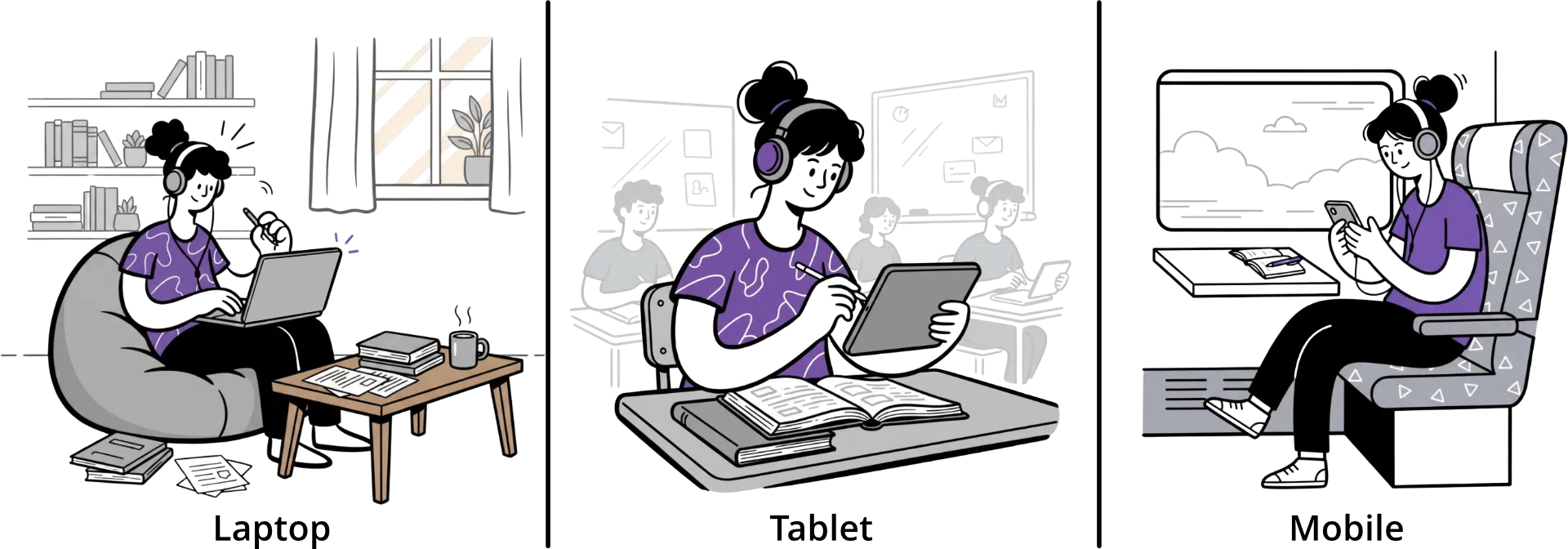
Study Slam works fully across laptops, tablets and smartphones, and adapts to however a student prefers to study. This flexibility reflects how students realistically fit revision into their day by:

Utilising “dead time”
University schedules are fragmented. A phone is often already in hand between lectures or while commuting. Study Slam converts this dead time into productive micro-learning sessions. Cognitive psychology has shown that spacing study across multiple short sessions over time produces better long-term retention than cramming.

Bypassing cognitive overload
The upfront effort and the cognitive overload of long revision sessions is what stops many from starting. Breaking content into small chunks removes that barrier and reduces mental fatigue, particularly helping students who experience executive function difficulties, fatigue or concentration-related conditions.

Capitalising on high screen time, not increasing it
A concern is that students spend too long on their phones. When a student reaches for their phone out of habit, Study Slam redirects that time into a short recall or study session. The aim is to capitalise on existing screen time, not add to it.
Why Revision is Harder for Some Students
For many students, the challenge is that conventional revision strategies work against the way they think. Study Slam was designed to address that.

Neurodivergent and SpLD Students
Planning revision, sustaining focus, processing large amounts of text, and organising information for memory recall can all become significant challenges for students with ADHD, dyslexia, dyspraxia, autism, and other specific learning differences.

Mental Health Conditions
Anxiety, low mood, and poor working memory can make revision feel overwhelming before it begins – often leading to avoidance behaviours that compound over time, and can result in students falling behind.

Physical and Hidden Disabilities
Long revision sessions can cause pain or fatigue, making regular breaks a necessity rather than a preference. Conditions affecting processing speed may require students to revisit material multiple times before it is retained.

The Science Behind Study Slam
Study Slam’s approach is grounded in three evidence-based principles of cognitive science. Whilst available on a variety of devices, the mobile-first capability of Study Slam allows micro-learning sessions to be done anytime, anywhere.

Spaced Repetition
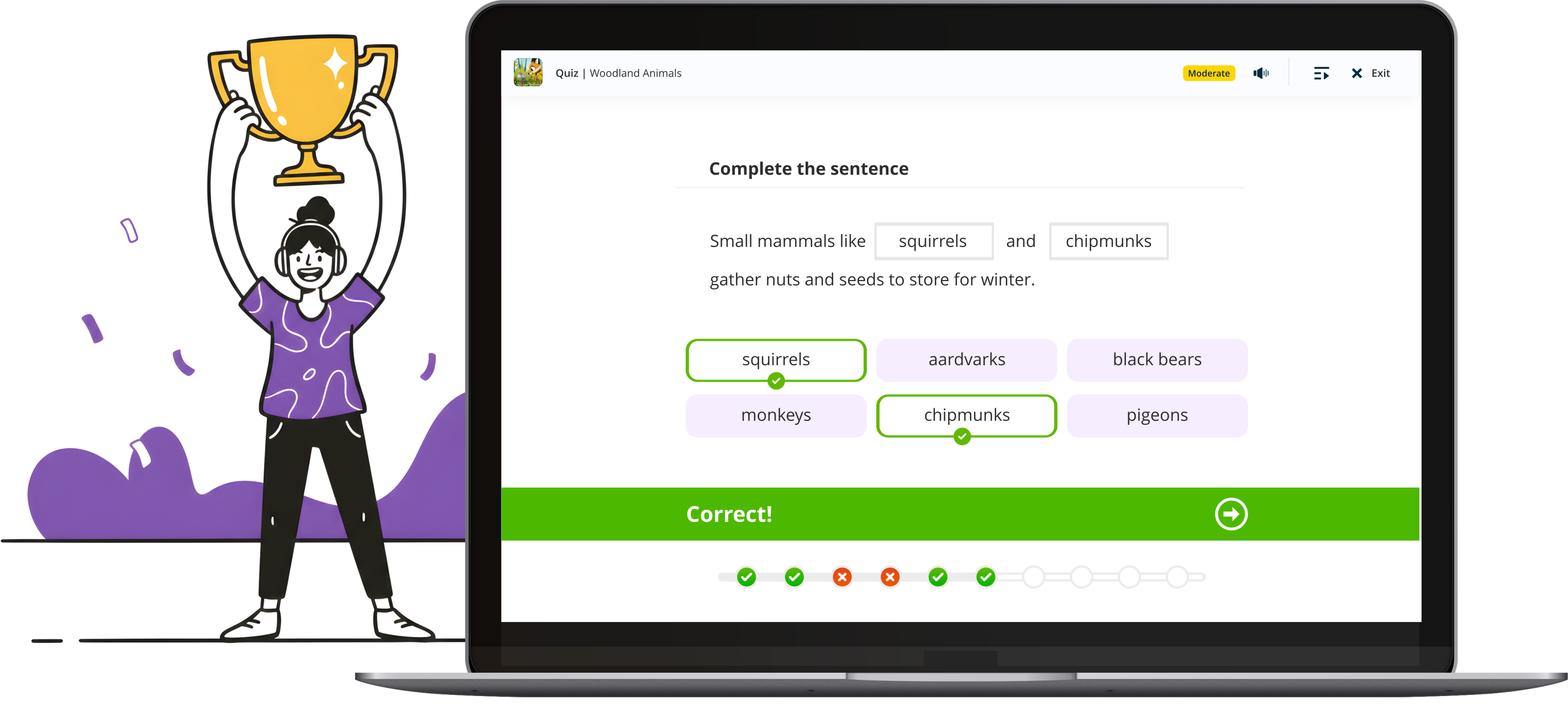
Revisiting material at strategic intervals significantly improves long-term retention. Study Slam’s scheduling engine builds this into every student’s revision plan automatically.
Retrieval Practice
Actively recalling information through quizzes builds stronger memory than passive re-reading – an effect shown to hold across learner types and subjects.

Micro-Learning
Short sessions of roughly 5-15 minutes improve retention compared to traditional cramming. For students with ADHD, fatigue-related conditions, or anxiety, the lower activation barrier makes the difference between revising and not revising at all.
Study Slam is designed to support revision, recall and understanding. It helps students practise with their own materials, but does not write assignments or replace a student’s own academic work.
Study Slam Supports Every Student’s Needs

From the Team Behind Ayoa
The makers of Study Slam are behind the Ayoa Mind Mapping app and have been building tools for neurodivergent learners for over a decade. Ayoa has DSA approval and is recommended by needs assessors and AT professionals across the UK.
Study Slam brings that same philosophy to revision – designed from the ground up, working across all platforms, with neurodivergent students in mind.